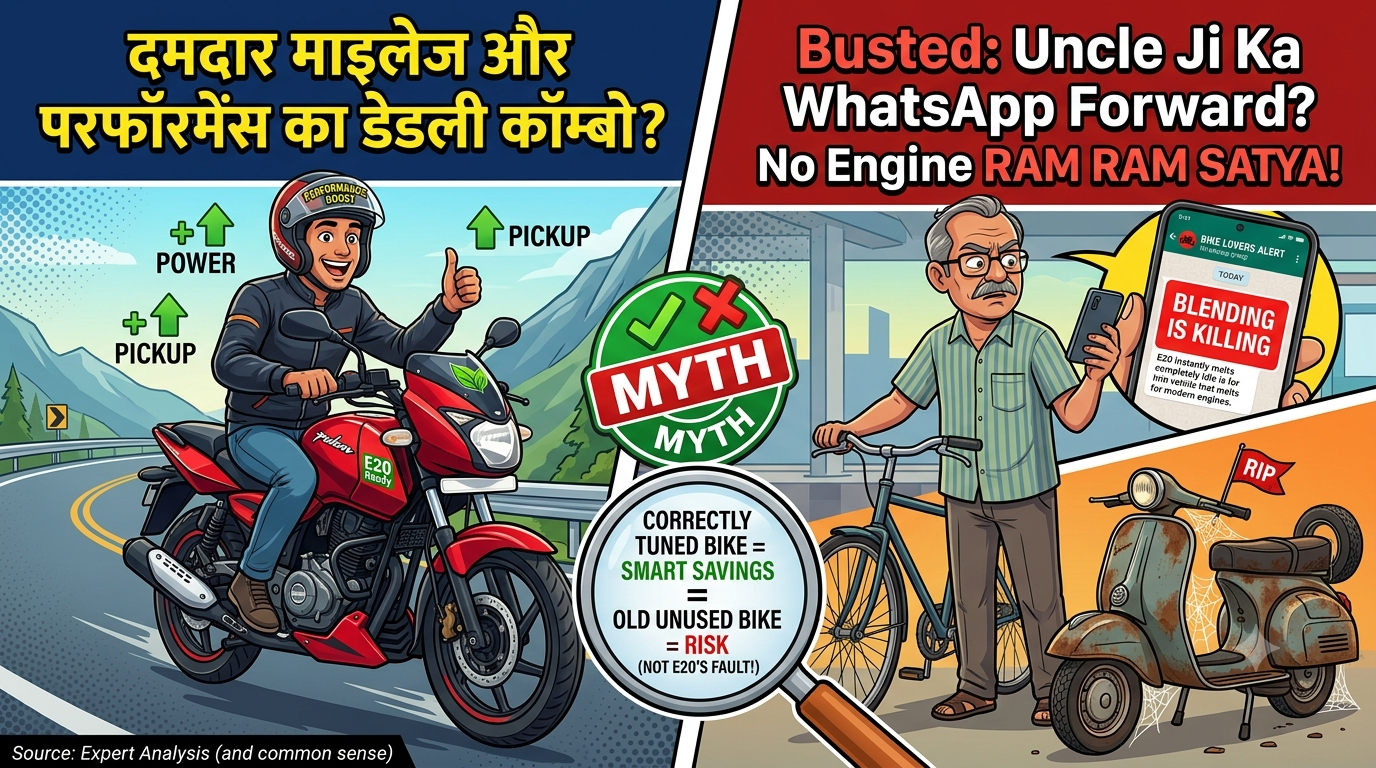
If you have visited a petrol pump in India recently, you might have noticed signs mentioning “E20 Petrol” or ethanol-blended fuel. Almost everyone on WhatsApp groups, bike forums, and social media is discussing how ethanol is changing the way our vehicles run. But what exactly is ethanol, why is it being mixed with petrol, and what does it mean for your bike or car?
In this simple guide, we will break down everything you need to know about ethanol-blended petrol in India in plain, easy-to-understand language.
What is Ethanol-Blended Petrol (E20)?
Ethanol is a plant-based alcohol fuel produced naturally by fermenting sugars. In India, it is mainly made from sugarcane molasses, maize (corn), and surplus grains like rice.
When petrol companies mix pure ethanol with regular petrol, it is called Ethanol-Blended Petrol (EBP).
-
E10 Fuel: 10% ethanol + 90% petrol.
-
E20 Fuel: 20% ethanol + 80% petrol.
India reached the milestone of blending 20% ethanol across petrol pumps nation-wide, making E20 the new standard fuel for petrol vehicles.
Why is India Mixing Ethanol with Petrol?
The government introduced the Ethanol Blending Programme for three major reasons that benefit the country’s economy, environment, and farmers.
1. Saving Massive Foreign Exchange
India imports nearly 85% of its crude oil requirements from foreign countries. By replacing 20% of petrol with domestically produced ethanol, India saves lakhs of crores of rupees in foreign exchange every single year.
2. Direct Support to Local Farmers
Ethanol is produced from crops grown by Indian farmers. When oil marketing companies purchase ethanol, thousands of crores of rupees go directly into the hands of sugarcane and grain farmers in states like Maharashtra, Uttar Pradesh, Karnataka, and Bihar.
3. Cleaner Air and Reduced Pollution
Burning pure petrol releases harmful carbon emissions into the air. Ethanol contains natural oxygen, which helps fuel burn more completely inside the engine. This reduces lifecycle carbon emissions by nearly 40%, making city air cleaner.
Mileage vs Performance: The “Deadly Combo” Reality
The biggest question on every vehicle owner’s mind is: Will ethanol damage my engine or ruin my mileage? Here is the reality about performance and mileage:
1. Superior Octane Rating & Better Pickup
Ethanol has a very high Research Octane Number (around 108.5 compared to 84.4 for pure petrol). When mixed into regular petrol, it elevates the fuel’s overall octane rating to around 95.
-
Smoother Acceleration: Higher octane prevents engine knocking (pinging sounds during hard acceleration).
-
Cleaner Engine: It leaves fewer carbon deposits on spark plugs and inside the engine cylinder.
-
Instant Power: Drivers often experience faster throttle response and smoother power delivery in modern engines.
2. Is There a Mileage Drop?
Because ethanol carries slightly less energy density per litre than pure petrol, there can be a small drop in fuel economy—usually around 3% to 5% in real-world riding conditions.
However, because the fuel burns cleaner and offers smoother pickup, most everyday riders consider this a fair trade-off—a true “damper mileage aur performance ka deadly combo” where minor fuel loss is balanced out by smoother engine response and cleaner performance!
Is E20 Petrol Safe for Your Vehicle?
4 Easy Tips for Vehicle Owners Using E20 Petrol
To keep your bike or scooter running like new on ethanol-blended petrol, follow these simple maintenance habits:
-
Avoid Storing Petrol for Long Periods: Ethanol attracts moisture from humid air if left standing for months. If you are going on a long trip, try to leave your fuel tank mostly empty.
-
Regular Servicing: Replace your fuel filter during routine service intervals to clear out any small dirt particles.
-
Use Quality Fuel Stations: Always fill up from reputed, high-volume petrol pumps to ensure you get clean, water-free fuel.
-
Check Rubber Hoses on Older Bikes: If you ride an older motorcycle, inspect the fuel pipe periodically during service to ensure there are no cracks or leaks.
Quick Overview: Key Facts About Ethanol in India
-
Blends Available: E10 (10% blend) and E20 (20% blend).
-
Octane Boost: Increases petrol octane to ~95 for smoother combustion.
-
Environmental Impact: Up to 40% reduction in lifecycle carbon emissions.
-
Foreign Exchange Savings: Over ₹1.97 lakh crore saved in oil import bills.
-
Farmer Income Generated: Over ₹1.66 lakh crore paid directly to agricultural producers.
Final Thoughts
Ethanol-blended petrol is not just a temporary trend—it is the future of transportation in India. While it brings a tiny drop in mileage, the benefits of cleaner emissions, smoother high-octane performance, reduced oil import dependency, and direct income for Indian farmers far outweigh the small drawbacks.
Next time you fill up your tank with E20 petrol, rest easy knowing your ride is contributing to a greener and more self-reliant India!