अगर आप भारत में बाइक या कार चलाते हैं, तो आपने E20 पेट्रोल और एथेनॉल ब्लेंडिंग (मिश्रण) के बारे में जरूर सुना होगा। देश भर के राइडर्स इसे “दमदार माइलेज और परफॉरमेंस का डेडली कॉम्बो” कहते हैं—इससे आपको तुरंत पिकअप के लिए हाई-ऑक्टेन फ्यूल मिलता है, और साथ ही देश के पेट्रोल आयात के खर्चे में बचत भी होती है!
लेकिन क्या आपने कभी सोचा है: यह सारा एथेनॉल कहाँ से आता है? भारत ने पहली बार इसे बनाना कब शुरू किया, पेट्रोल में इसे मिलाना कब से शुरू हुआ, और एथेनॉल बनाने की बड़ी-बड़ी फैक्ट्रियां कहाँ स्थित हैं?
इस आसान गाइड में, हम भारत में एथेनॉल के पूरे इतिहास, मुख्य फैक्ट्रियों के हब और साल-दर-साल हुई इसकी ग्रोथ को आसान शब्दों में समझेंगे।
1. भारत ने एथेनॉल का उत्पादन कब शुरू किया?
एथेनॉल कोई नई खोज नहीं है। भारत में एथेनॉल उत्पादन का एक लंबा इतिहास रहा है जो गाड़ियों के इंजन तक पहुँचने से कई दशक पहले शुरू हो चुका था।
-
शुरुआती दिन (2000 से पहले): पारंपरिक रूप से, भारत मुख्य रूप से चीनी उद्योग के एक उप-उत्पाद (byproduct) के रूप में एथेनॉल बनाता था। जब चीनी मिलें गन्ने को प्रोसेस करती थीं, तो उनसे शीरा (मिलासिस – एक गाढ़ा चिपचिपा तरल) मिलता था। इस शीरे को फर्मेंट (किण्वित) करके दवाओं, औद्योगिक रसायनों और पेय पदार्थों के लिए अल्कोहल (एथेनॉल) बनाया जाता था।
-
ईंधन-ग्रेड एथेनॉल की ओर कदम (2000 का दशक): 2000 के दशक की शुरुआत में, भारत सरकार को अहसास हुआ कि शुद्ध एथेनॉल को ईंधन-ग्रेड (99.5% शुद्ध एनहाइड्रस अल्कोहल) में बदला जा सकता है ताकि इसे इंजनों में चलाया जा सके।
-
अनाज से एथेनॉल की आधुनिक क्रांति (2018 के बाद): 2018 तक, एथेनॉल लगभग पूरी तरह से गन्ने से ही बनाया जाता था। उत्पादन बढ़ाने के लिए सरकार ने डिस्टिलरीज (शराब/एथेनॉल बनाने वाली इकाइयों) को मक्का, टूटे चावल और खराब अनाज का उपयोग करने की अनुमति दी। आज भारत गन्ने और अनाज दोनों से करोड़ों लीटर एथेनॉल बना रहा है!
2. भारत पेट्रोल में एथेनॉल कब से मिला रहा है?
पेट्रोल में एथेनॉल मिलाने का सफर तीन मुख्य चरणों में पूरा हुआ:
चरण 1: पहला परीक्षण (2001 – 2003)
भारत ने सबसे पहले 2001 में छोटे स्तर पर ट्रायल के तौर पर एथेनॉल ब्लेंडिंग शुरू की थी। सकारात्मक परिणाम देखकर, पेट्रोलियम मंत्रालय ने जनवरी 2003 में कुछ चुनिंदा राज्यों में 5% एथेनॉल (E5) मिलाने के छोटे से लक्ष्य के साथ एथेनॉल ब्लेंडेड पेट्रोल (EBP) कार्यक्रम का आधिकारिक शुभारंभ किया।
चरण 2: धीमी प्रगति (2006 – 2013)
2006 से 2013 के बीच, सप्लाई में उतार-चढ़ाव के कारण ब्लेंडिंग की गति धीमी रही। चीनी मिलों के पास पर्याप्त उपकरण नहीं थे और कीमतें भी तय नहीं थीं। 2013 तक, भारत पूरे देश में पेट्रोल में 1.5% से भी कम एथेनॉल मिला पा रहा था।
चरण 3: तेज रफ्तार से विस्तार (2014 – अब तक)
2014 के बाद से, सरकार ने एथेनॉल की तय कीमतें, लंबे समय के खरीद अनुबंध और डिस्टिलरीज को वित्तीय सहायता देना शुरू किया।
-
10% ब्लेंडिंग (E10): भारत ने नवंबर 2022 तक 10% ब्लेंडिंग का लक्ष्य रखा था, लेकिन इसे समय से 5 महीने पहले जून 2022 में ही हासिल कर लिया!
-
20% ब्लेंडिंग (E20): देश भर में 20% एथेनॉल मिलाने का मूल लक्ष्य पहले 2030 था, लेकिन इसे तेजी से पूरा करते हुए 2025-2026 कर दिया गया। आज, E20 ईंधन भारत के हजारों पेट्रोल पंपों पर उपलब्ध है!
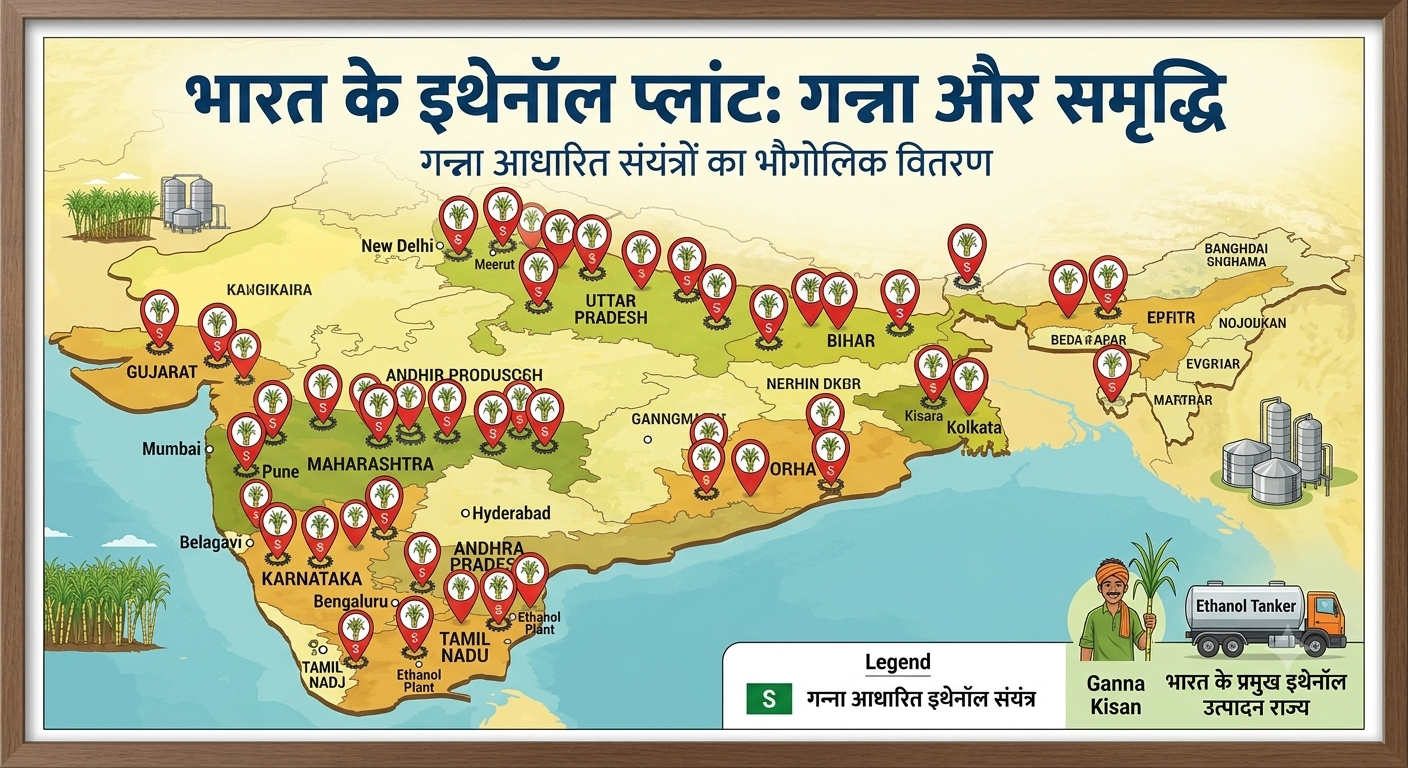
3. भारत में एथेनॉल प्लांट कहाँ-कहाँ स्थित हैं?
एथेनॉल प्लांट आमतौर पर उन इलाकों के पास बनाए जाते हैं जहाँ बहुत सारी चीनी मिलें या अनाज की खेती होती है। आज भारत में कई प्रमुख राज्यों में सैकड़ों एथेनॉल डिस्टिलरीज काम कर रही हैं:
| राज्य | उपयोग किया जाने वाला मुख्य कच्चा माल | यह एक बड़ा हब क्यों है? |
| उत्तर प्रदेश | गन्ने का रस, शीरा (Molasses), मक्का | भारत का सबसे बड़ा गन्ना उत्पादक राज्य, जहाँ सबसे ज्यादा चीनी-आधारित एथेनॉल प्लांट हैं। |
| महाराष्ट्र | गन्ना और शीरा | विशाल सहकारी चीनी मिलों का घर, जो रोजाना लाखों लीटर एथेनॉल बनाती हैं। |
| कर्नाटक | गन्ना और अनाज | दक्षिण भारत में प्रमुख उत्पादक, जहाँ अनाज-आधारित प्लांट तेज़ी से बढ़ रहे हैं। |
| बिहार | मक्का और टूटे चावल | अनाज-आधारित एथेनॉल प्लांट लगाने वाला पहला राज्य, जो अतिरिक्त फसलों को ईंधन में बदल रहा है। |
| पंजाब और हरियाणा | पराली और अतिरिक्त अनाज | अनाज डिस्टिलरी और पर्यावरण-अनुकूल 2G (दूसरी पीढ़ी) बायो-एथेनॉल प्लांट पर केंद्रित। |
| तमिलनाडु और आंध्र प्रदेश | शीरा और अनाज का मिश्रण | दक्षिण के पेट्रोल डिपो तक ईंधन एथेनॉल की सप्लाई करने वाले मुख्य केंद्र। |
4. सालाना ग्रोथ चार्ट: भारत में एथेनॉल का तेजी से बढ़ता उत्पादन
यह समझने के लिए कि भारत में एथेनॉल की सप्लाई कितनी तेजी से बढ़ी है, EBP कार्यक्रम के तहत तेल कंपनियों (OMCs) को दी गई सालाना सप्लाई के आंकड़ों पर नज़र डालें:
तेल कंपनियों को सालाना एथेनॉल सप्लाई (करोड़ लीटर में)
-
2013-14: 38 करोड़ लीटर
-
2015-16: 111 करोड़ लीटर
-
2017-18: 150 करोड़ लीटर
-
2019-20: 173 करोड़ लीटर
-
2021-22: 433 करोड़ लीटर
-
2022-23: 502 करोड़ लीटर
-
2023-24: 670 करोड़ लीटर
-
2024-25: 850+ करोड़ लीटर
-
2025-26: 1016 करोड़ लीटर
(स्रोत: पेट्रोलियम और प्राकृतिक गैस मंत्रालय (MoPNG) / OMC डेटा)
केवल एक दशक में, भारत के ईंधन एथेनॉल उत्पादन में 2000% से अधिक की बढ़ोतरी हुई है!
भारतीय वाहन मालिक के रूप में यह आपके लिए क्यों मायने रखता है?
-
बेहतर हाई-ऑक्टेन परफॉरमेंस: एथेनॉल मिलाने से पेट्रोल की ऑक्टेन रेटिंग बढ़कर लगभग 95 हो जाती है, जिससे इंजन में नॉकिंग नहीं होती और कार/बाइक को स्मूथ व तुरंत पिकअप मिलता है।
-
विदेशी मुद्रा की भारी बचत: आयातित कच्चे तेल की जगह देश में बने एथेनॉल का इस्तेमाल करके भारत ने हजारों करोड़ रुपये की विदेशी मुद्रा बचाई है।
-
किसानों की सीधी कमाई: ₹1 लाख करोड़ से अधिक की राशि सीधे गन्ने और अनाज उगाने वाले किसानों के पास गई है, जिससे ग्रामीण अर्थव्यवस्था को मजबूती मिली है।
-
साफ-सुथरे शहर: एथेनॉल शुद्ध पेट्रोल की तुलना में अधिक साफ जलता है, जिससे हमारे शहरों में हानिकारक कार्बन उत्सर्जन कम होता है।
आखिरी बात
चीनी मिलों में अल्कोहल के छोटे-छोटे बैच बनाने से लेकर हर साल 800 करोड़ लीटर से अधिक पर्यावरण-अनुकूल ईंधन बनाने तक, भारत की एथेनॉल की कहानी एक बहुत बड़ी सफलता है। अगली बार जब आप अपनी गाड़ी में E20 पेट्रोल भरवाएं, तो याद रखें कि आपकी गाड़ी भारतीय मिट्टी में उगे ईंधन से चल रही है!