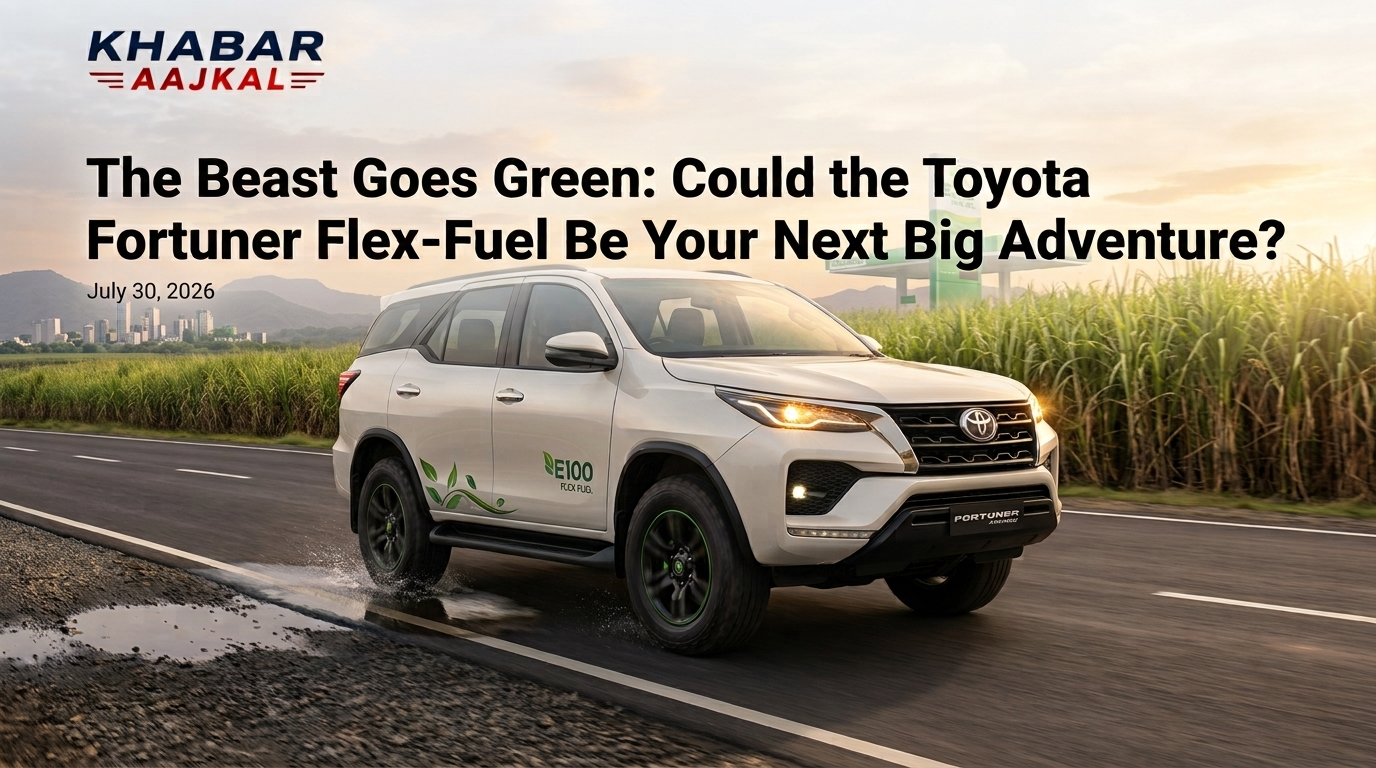
जब आप टोयोटा फॉर्च्यूनर (Toyota Fortuner) के बारे में सोचते हैं, तो कुछ शब्द तुरंत दिमाग में आते हैं: बेजोड़ रोड प्रेजेंस, गजब की विश्वसनीयता (रिलायबिलिटी) और दमदार पावर। सालों से यह भारतीय सड़कों पर एकछत्र राज कर रही है और एसयूवी सेगमेंट की बेताज बादशाह बनी हुई है। लेकिन जैसे-जैसे दुनिया हरित ऊर्जा (क्लीन एनर्जी) की ओर बढ़ रही है, कई कार प्रेमियों के मन में यह सवाल उठता है: क्या हमारी यह पसंदीदा बड़ी एसयूवी अपनी आत्मा को खोए बिना ग्रीन-एनर्जी वाले भविष्य में टिक पाएगी?
टोयोटा ने अभी-अभी इसका जवाब दिया है, और वह जवाब है—हाँ, बिल्कुल! इंडोनेशिया इंटरनेशनल मोटर शो (GIIAS) में टोयोटा ने आधिकारिक तौर पर Toyota Fortuner Flex-Fuel Concept को पेश किया—एक ऐसी SUV जिसे 100% बायो-एथेनॉल (E100) पर चलने के लिए डिज़ाइन किया गया है।
एसयूवी प्रेमियों और पर्यावरण के प्रति जागरूक ड्राइवरों, दोनों के लिए यह प्रोटोटाइप सिर्फ एक तकनीकी प्रयोग नहीं है; यह इस बात का एक बड़ा सबूत है कि बड़ी और सक्षम एसयूवी पावर से समझौता किए बिना भी पर्यावरण-अनुकूल (ग्रीन) हो सकती हैं। और सबसे अच्छी बात? भारत जिस तेजी से एथेनॉल-मिश्रित ईंधन को अपना रहा है, यह फ्लेक्स-फ्यूल कार बहुत जल्द भारतीय सड़कों पर भी दिखाई दे सकती है।
यहाँ इस इको-फ्रेंडली बीस्ट के बारे में वह सब कुछ है जो आपको जानना चाहिए, यह कैसे काम करती है, और इसके भारत में संभावित लॉन्च के क्या मायने हैं।
टोयोटा फॉर्च्यूनर फ्लेक्स-फ्यूल कॉन्सेप्ट क्या है?
पहली नज़र में, यह कॉन्सेप्ट वाहन बिल्कुल उसी दबंग और आक्रामक फॉर्च्यूनर जैसा दिखता है जिसे हम सब पसंद करते हैं। इसकी बड़ी ग्रिल, मस्कुलर लुक और रोड प्रेजेंस में कोई बदलाव नहीं किया गया है। हालांकि, असली क्रांति इसके बोनट के नीचे छिपी है।
पारंपरिक पेट्रोल या डीजल वाहनों के विपरीत, एक फ्लेक्स-फ्यूल वाहन (FFV) को पेट्रोल और एथेनॉल के मिश्रण—या यहाँ तक कि 100% शुद्ध बायो-एथेनॉल (E100) पर चलने के लिए डिज़ाइन किया गया है। एथेनॉल एक पौधे आधारित नवीकरणीय (रिन्यूएबल) ईंधन है जो गन्ने, मक्के और अनाज के अवशेषों से बनता है। फॉर्च्यूनर को 100% बायो-एथेनॉल पर चलने लायक बनाकर, टोयोटा ने दिखाया है कि फुल-साइज़ एसयूवी भी कार्बन उत्सर्जन को भारी मात्रा में कम कर सकती हैं।
बोनट के नीचे: पावर और सस्टेनेबिलिटी का संगम
कई कार प्रेमियों को डर रहता है कि इको-फ्रेंडली ईंधन का मतलब परफॉरमेंस में गिरावट होगा। लेकिन टोयोटा ने यह पक्का किया है कि फॉर्च्यूनर फ्लेक्स-फ्यूल की पावर में कोई कमी न आए। इस कॉन्सेप्ट मॉडल की मुख्य विशेषताएं नीचे दी गई हैं:
| स्पेसिफिकेशन | विवरण |
| इंजन टाइप | 2.7-लीटर, 4-सिलेंडर पेट्रोल इंजन (E100 के लिए मॉडिफाइड) |
| ईंधन क्षमता | 100% बायो-एथेनॉल (E100) / फ्लेक्सिबल ब्लेंड्स |
| पावर आउटपुट | 161 bhp |
| टॉर्क | 243 Nm |
| ड्राइवट्रेन | रियर-व्हील ड्राइव (RWD) |
टोयोटा द्वारा किए गए मैकेनिकल बदलाव
चूंकि सामान्य पेट्रोल की तुलना में एथेनॉल की रासायनिक विशेषताएं अलग होती हैं, इसलिए टोयोटा ने सिर्फ पुराने इंजन में नया ईंधन नहीं डाला। उन्होंने इंजन के कई जरूरी पार्ट्स को पूरी तरह री-इंजीनियर किया है:
-
मॉडिफाइड फ्यूल लाइन्स और होज़: एथेनॉल से जंग न लगे, इसके लिए खास मटीरियल वाली रबर पाइपों का इस्तेमाल किया गया है।
-
ट्यून्ड ईसीयू (ECU) और फ्यूल इंजेक्शन: इंजन का कंप्यूटर अब ऑटोमैटिकली ईंधन में एथेनॉल की मात्रा को पहचान लेता है और सुचारू पिकअप के लिए इग्निशन टाइमिंग को एडजस्ट कर लेता है।
-
मजबूत सिलेंडर हेड और वॉल्व: इंजन के अंदरूनी हिस्सों को एथेनॉल के उच्च ऑक्टेन पर काम करने के लिए मजबूत बनाया गया है।
भारत में लॉन्च क्यों समझदारी भरा कदम है?
हालांकि फ्लेक्स-फ्यूल फॉर्च्यूनर फिलहाल दक्षिण-पूर्व एशिया में टेस्ट किया जा रहा एक कॉन्सेप्ट है, लेकिन संकेत यही बताते हैं कि भविष्य में इसे भारत में लॉन्च किया जा सकता है। भारतीय खरीदारों के पास उत्साहित होने के पूरे कारण हैं:
-
बायोफ्यूल पर सरकार का जोर: भारत सरकार कच्चे तेल के आयात को कम करने और प्रदूषण घटाने के लिए एथेनॉल (जैसे E20) को तेजी से बढ़ावा दे रही है।
-
सस्ता ईंधन: पेट्रोल की तुलना में एथेनॉल काफी सस्ता पड़ता है, जिससे कार चलाने का खर्च कम होगा।
-
‘डीजल की चिंता’ से मुक्ति: डीजल इंजनों पर सख्त होते नियमों और 10 साल की समय-सीमा के कारण कई खरीदार झिझकते हैं। फ्लेक्स-फ्यूल आपको डीजल जैसी पावर देता है, लेकिन बिना किसी पाबंदी के डर के।
अक्सर पूछे जाने वाले सवाल (FAQs)
1. फ्लेक्स-फ्यूल इंजन क्या होता है?
फ्लेक्स-फ्यूल इंजन एक ऐसा इंजन होता है जो एक से अधिक प्रकार के ईंधन पर चल सकता है—जैसे पेट्रोल और एथेनॉल का कोई भी मिश्रण (E10 से लेकर E100 तक)। कार का सिस्टम खुद ही ईंधन के अनुपात को पहचान कर इंजन की सेटिंग को एडजस्ट कर लेता है।
2. क्या मैं अपनी सामान्य पेट्रोल कार में E100 एथेनॉल डाल सकता हूँ?
नहीं! सामान्य पेट्रोल इंजन हाई-एथेनॉल (जैसे E85 या E100) झेलने के लिए नहीं बने होते हैं। एथेनॉल से सामान्य कार की रबर पाइपों और एल्युमीनियम पार्ट्स में जंग लग सकती है। फ्लेक्स-फ्यूल वाहनों में इसके लिए खास मॉडिफाइड पार्ट्स लगे होते हैं।
3. क्या फ्लेक्स-फ्यूल से फॉर्च्यूनर की पावर कम हो जाएगी?
बिल्कुल नहीं! फॉर्च्यूनर फ्लेक्स-फ्यूल कॉन्सेप्ट 161 bhp की पावर और 243 Nm का टॉर्क जनरेट करता है, जो सामान्य 2.7-लीटर पेट्रोल फॉर्च्यूनर के बराबर ही है।
अंतिम निर्णय
टोयोटा फॉर्च्यूनर फ्लेक्स-फ्यूल यह साबित करती है कि पर्यावरण-अनुकूल ड्राइविंग का मतलब बड़ी 7-सीटर कार, ऑफ-रोडिंग क्षमता या लंबी रोड ट्रिप्स के मजे को छोड़ना नहीं है। यद्यपि टोयोटा ने अभी तक भारत के लिए लॉन्च की आधिकारिक तारीख नहीं बताई है, लेकिन यह तकनीक यह साबित करती है कि दमदार गाड़ियों का भविष्य भी काफी सुरक्षित और ‘ग्रीन’ है!